Sunday, February 26, 2012

Growing Up.

In our Western World, growth is our mantra.  Our schools, our religions, our governments, our businesses, all our institutions bombard us with the same message that to be all that we are meant to be means we have to grow.  Growth in and of itself can be a good thing, but unfortunately the growth that can be our doom is material growth, which has limits.   

So instead of thinking for ourselves - we take these messages literally and we over feed our bodies and become obese; we fill our cities with ever expanding populations, we produce more and more babies filling our planet with people; and to try and meet our never ending demand for more and more stuff, our economies drive us to consume more and more resources.  As a result, there is little space left for anything else but the material expansion of the human race. 


This pure focus on material growth however leaves most of us feeling empty, lonely, hurt, angry, and numbed.  So how did we get this way, why have we forgotten how to think for ourselves?  Richard Rohr’s book FALLINGUPWARD:  A SPIRITUALITY FOR THE TWO HALVES OF LIFE provides a good explanation of why we are stuck in meaningless pattern of growth.  The book points out how healthy cultures value two halves of life, but in our postmodern culture we discourage people from growing up.


In the first half of life, our external laws, traditions, customs, boundaries, and morality form a container that helps to shape who we will become.  They also provide us with the friction we need to move on and develop our own inner guidance systems that lead us beyond these first half of life limited simple guidelines that fall apart in our complex world.  As we move through life and experience the struggles that life throws at us - our brushes with the law, our failed relationships, and our other failures - we begin to realize that simple rules and regulations, or escapes, do not isolate us from the struggles in life, or the pain they bring us. 


It is by embracing these falls – these failures - that we begin to see the limits of first half of life thinking.  We learn to live in tension, instead of searching for ways to avoid it.  We learn to transition from conditional love based on compliance, into an unconditional love based on connection.   Instead of repeating mistakes over and over again, we embrace our mistakes and learn to try new ways.   That is how real growth occurs - not by clinging to old ways, old rules, or old moralities.  That is how we move beyond the limits of our egocentric first half of life.   


Our institutions and the people who make them up, are stuck in the first half of life management methods.  They discourage real growth by imposing methods designed to keep people stuck, to keep systems in place, to keep certain people in places of power.  It just might be that the friction that all this control produces, is reaching a point where the resulting heat can melt down these immature structures of hierarchy.  And from the ashes we can rise up to reclaim our second half of life – to really grow up. 


As Rohr reminds us:  “no one can keep you from the second half of your own life except yourself.  Nothing can inhibit your second journey except your own lack of courage, patience, and imagination.   Your second journey is all yours to walk or to avoid.  […], some falling apart of the first journey is necessary for this to happen, so do not waste a moment of time lamenting poor parenting, lost job, failed relationship, physical handicap, gender identity, economic poverty , or even the tragedy of any kind of abuse.  Pain is part of the deal.  If you don’t walk into the second half of your own life, it is you who do not want it.”       

Thursday, December 22, 2011

Simplicity

The beauty of the universe expresses itself in simplicity.
Margaret J. Wheatley, TURNING TO ONE ANOTHER

Winter is the time of year when we are confronted head-on with simplicity.   In the latitude where I live, as the earth turns away from the sun, temperatures drop. Water molecules slow down to the point where water freezes as cold envelops the landscape.   Most plants go into a state of rest - they shed their leaves in preparation for this time of rest.  Many animals hibernate, or migrate to warmer climates.  Those who remain grow thicker fur, find burrows to hole up in, and begin to feast on the stockpiles of food they have gathered in preparation for this time of scarcity.  And it is during this period where darkness dominates the hours of the day.

Humans often try to fight this time of simplicity.  We turn on more lights, we crank up our furnaces, we lock ourselves up in our homes and our buildings, or we try to migrate to warmer destinations ourselves.  Instead of finding ways to participate in this season of cold, we look for ways to control it, or distract ourselves from it.  But as hard as we try winter goes on.   So why don’t we simply enjoy it?  Could it be that this time of reflection scares us?  

Despite our large brains, it seems that more often than not we have become afraid of thinking, of looking around us to see what all our attempts at control are doing to the world around us and to ourselves.   My goal for this season is to take advantage of this time of slowness, to look at my own life, and to find ways that I can enjoy the simplicity of the universe - perhaps to become more a part of it.  I invite you to do the same.  

Saturday, November 5, 2011

ECOLOGICAL ETHICS

A thing is right when it tends to preserve the integrity, stability, and beauty of the biotic community.  It is wrong when it tends otherwise.  
Aldo Leopold,  The Land Ethic, A SAND COUNTY ALMANAC

Whatever preserves and enhances this meadow in the natural cycles of its transformation is good; whatever opposes this meadow or negates it is not good.
Thomas Berry, The Meadow Across the Creek, THE GREAT WORK

Aldo Leopold included the quote above in one of the last chapters of his book THE SAND COUNTY ALMANAC.  The chapters preceding The Land Ethic highlight experiences that Leopold had with the natural world, with the ecosystems where he lived, worked, and played. Click here to read his essay "The Land Ethic".

The quote from Thomas Berry comes from his essay where he tells the story of how as a boy, he came across a meadow across a small creek near his new home that was filled with lilies rising above a thick grass. “It was not only the lilies.  It was the singing of the crickets and the woodlands in the distance and the clouds in the clear sky. “   Click here to listen to Berry tell about this experience.

It is our experiences with the natural world, with the ecosystem that sustains us, that shape our response, that craft our ethics.  When our experiences are distorted by our complicated human inventions - these ethics become driven by things like economics, politics, or religion.  When these experiences occur naturally - our ethics are guided by the simplicity of the ecosystem of which we are but a part. 

Saturday, October 1, 2011

FEARING PASSION

Every now and then I need to remind myself to face my fears.  Normally when I do, they seem to mostly fade away.   So the other night I decided to face one fear I have had since I was a child and that is the fear of darkness.  I went outside and started walking down a trail not far from my house. 

Walking along, I neared a place where someone had spray painted the word “FEAR” in white letters across the black asphalt pavement.  The word was located in a remote part of the path, far from any houses, and where no light reached the trail.  I began to think about the word and then all of a sudden was startled by a rustling noise in the trees next to the path.  


My body responded by injecting adrenaline into my bloodstream which got my heart pounding and I quickened my step as I tried to figure out what made the noise and if the noisemaker was a threat or not.  All this happened in a split second, and I soon realized that a small animal must have been dozing in the woods and my approach down the path startled it as much as it startled me.  I continued my walk, smiling to myself at how thinking about fear, had essentially increased my fear. 

Passion is another feeling I need to face.  Somewhere along the fear dominated paths of life I came to believe that one should not follow their passion – for that could lead you into dangerous places, places where people were out to get you or where strange creatures might be lurking.  But as I face fears and get out into the darkness, I have learned that following passions is much more interesting than avoiding fears.  Following passion sheds light on the darkness.  
   

Today on another walk down the path during the daylight, I was happy to see a number of positive messages written along the path in pastel colored sidewalk chalk – a good reminder to me to follow the passion – because as the sidewalk chalk writer reminded me - “YOU CAN DO IT!”

Thursday, September 22, 2011

That's It


In the last scene of the movie BROKEN FLOWERS, Bill Murray plays the character Don Johnston, a middle age bachelor who just returns from a quest to meet with five former lovers to figure out which one may have sent him a mysterious note on pink paper claiming he was the father of son from their relationship 20 years ago.  He meets up with a young man, played by Mark Weber, whom he saw at the airport the night before and wonders if this kid might be his son.  He buys him a sandwich and they sit outside and talk. 

The kid asks, “So a, as a guy who just bought another guy a sandwich, do you have any philosophical tips or anything, for a guy on a kind of road trip?”  Johnston replies, “Are you asking me?”  The Kid responds, “Ya”.  Johnston says, “The past is gone, I know that.  The future isn’t here yet, whatever it is going to be.   So all there is - is this - the present.  That’s it. " 

Wednesday, July 6, 2011

Reflecting On Stars

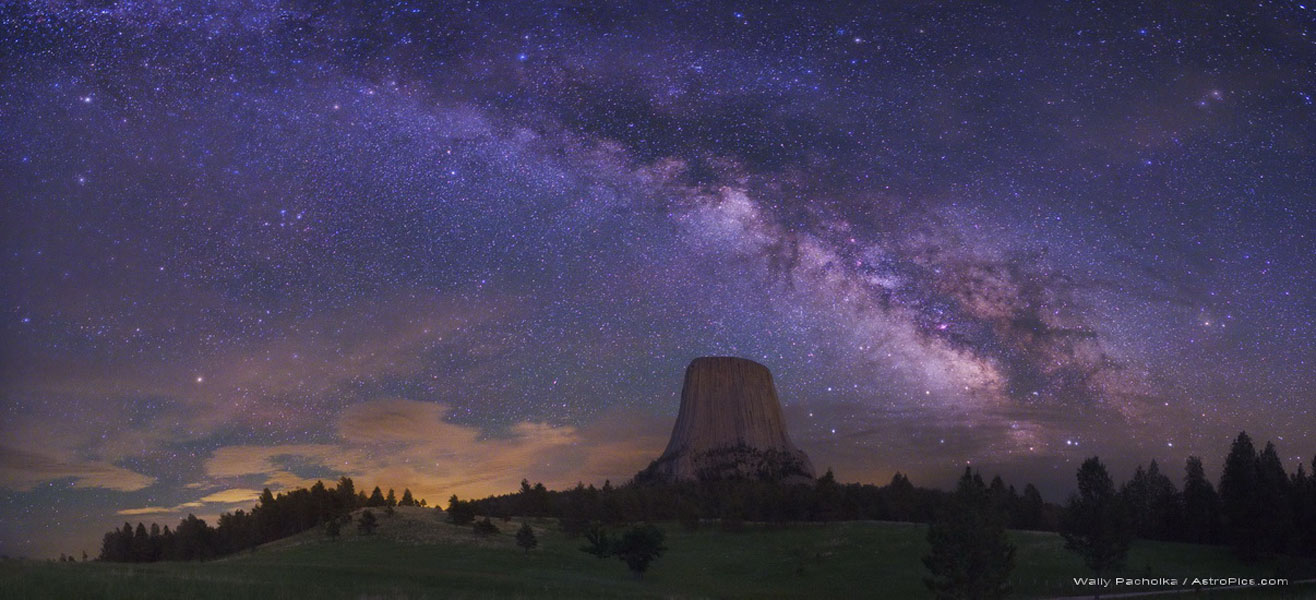
For just as the Milky Way is the universe in the form of a galaxy, an orchid is the universe in the form of a flower, we are the universe in the form of a human.  And every time we are drawn to look up in the night sky and reflect on the awesome beauty of the universe, we are actually the universe reflecting on itself.  And this changes everything.


Brian Thomas Swimme and Mary Evelyn Tucker, Journey Of The Universe.

Reflecting on stars, something we all have done at one time or another can be difficult in our electric world.  Where I live, the lights that we think we need to keep us safe from the unknown that the darkness harbors, blind us from being able to even see the multitude of stars that make up the galaxy we journey through the universe with.  But despite our best attempts to overwhelm the darkness, a few hundreds of stars are still able to break through our artificial lights and share the nighttime sky with us. 


Yesterday, I experienced another form of blindness, what I think is called an ocular migraine.  While reading a book, suddenly a bright jagged image of light began flashing in my eye, making it difficult if not impossible to be able to focus on the words on the page.  Being unable to read, I walked outside and sat in a chair trying to figure out what the flashing in my eyes was all about.  

 I noticed my neighbor mowing his lawn across the street, and it seemed strange that the flashing in my eye seemed to resonate at the same frequency as the gasoline fueled engine in my neighbor’s lawn mower. As I sat, I wondered if it was just a coincidence between the flashing light in my eye and the roaring engine, or if there was a connection.  Suddenly, my neighbor put his mower in to neutral resulting in a reduction in the RPM of the mower engine and the flashing in my eyes stopped.  When he put the mower into gear again, the flashing fortunately did not start up again.  


Coincidence or connection  ̶  the incident reminded me that in our electric motorized world  ̶  the noise, electrical lights, and other waste we spew into our environment prevent us from being able to fully interact with the world around us.  If we want change the way we are, we need to create space where we can find the connections that will lead us to a better way.  

So the next time you feel blinded, take some time to use your other senses to understand what it is that you are doing that is causing you to lose your vision.        

Sunday, June 12, 2011

Sustainable Cake

This week marked the 49th time that the earth has circled our sun since I entered the world in 1962.  In his birthday greeting to me, my older brother asked me if I had a sustainable birthday cake in honor of my one year from being on the earth for half a century.   His question along with an article by Greg Breining in today’s Star Tribune titled “Is Sustainability Sustainable?got me thinking about what it means to be sustainable.   


On my part, I have sustained (or continued to exist) on this earth for 49 years.  During this existence, I have experienced much growth – from the nurturing I received, and much learning – mostly from my mistakes.   I have not led a stagnant life, despite my attempts at times to fight the changes that I experienced.  There is a part of me that would like to take the credit for this accomplishment, but there is another part that realizes that my continuing life has much to do with forces beyond my control.  


I was fortunate to have been born into a family that had the available resources to keep me alive and relatively healthy as a child.  It was from my family and the community in which I grew up that I learned some of the tricks of sustainability.  These include the simple things like living healthy, avoiding unnecessary risks, and to have a basic respect for and participation in the community around me. 


As I continued to grow, I began to understand that the community that sustained me included not only the human community, but also the land on which I lived, the air I breathed, the water I drank, and the plants and animals that fed me.  It was not only their basic life sustaining functions that kept me going, but that these components of the ecosystem exist -- without them, my life holds little meaning. 


I also began to understand that my actions and the actions of the other human beings that lived in my community could play a big part in determining whether or not the other members of my ecosystem would be sustained or perish, and in effect continue to be able to sustain my own existence.  And so the bigger question for me becomes not whether my cake was sustainable or if sustainability is sustainable, but how do I need to act to avoid destroying the ecosystem that sustains me?   


After reading Breining’s article, I am not sure what he is recommending to his readers as far as whether or not sustainability is sustainable.   He seems to imply that sustainability cannot be defined, or that its numerous definitions make it incomprehensible, or that to know it presumes ability to “divine the future”.    Breining writes that “‘sustainability’ is a reflection of the human abhorrence of change and a desire for stability”.  He concludes by telling us to “look to advances in technology and planning, in production of energy and treatment of land and water, and the surprises they will bring in an unknowable future.”

As I reflect back on my life, it is not knowing my future that has sustained me, nor has living a stagnant life.   I also don’t believe that technology deserves much credit, nor planning or energy production.  The land and water and other components of the ecosystem however do deserve credit for my sustenance and how I treat them will play a big role in whether I continue to grow and adapt or perish.  In other words, if I respect the entire community that has sustained me to this point in my life -- I can have my cake and eat it too.