Originally posted on the old Servant Leadership Blog 12/5/07. In his essay “The Requirements of Responsibility”, Robert Greenleaf points out some key concepts regarding responsibility.
Responsibility,
[…], requires that a person think, speak, and act as if personally
accountable to all who may be affected by his or her thoughts, words,
and deeds.
In an imperfect world, it is a goal, something to work toward, even if never to accomplish fully.
The big question, is the trend right? Am I moving?
The requirements of responsibility are internal rather than external.
Responsibility is not tested by a formula, a code, or a set of rules.
The
potentially strong person acquires, early in the mature years, the
feeling of total responsibility for the wider community of which he or
she is a part.
This person doesn’t necessarily act totally responsible – […] – but feels responsible, totally responsible.
The things that are good for the society please this person, and the things that harm it cause pain - deep down inside.
Most
of us develop this attitude of total responsibility toward our family;
but it becomes qualitative and attenuated as it radiates to the wider
community.
[T]he feeling of total responsibility is born, not made.
Charity: public provision for the relief of the needy;
lenient judgment of others.
Who benefits from our acts of charity? Is it the needy or ourselves? And who really benefits from
our granting leniency to the outcasts from our society? Is it the outcast, or is it the judge? Do judges sleep better at night when they
offer leniency to the outlaws? And why do
people operate outside our laws? Could
it be that they have to in order to survive, or to stay sane?
Do the homeless sleep better, when they sleep outside our homes? And do the homeless sleep better under
bridges or under the stars? Are homeless
shelters, shelters for the homeless, or do they shelter us from the guilt that
seeing the homeless causes us. Or are they simply tax shelters for the profits
we have collected from the poor? And what happens to the homeless after we replace them in the home?
When we place our change in the coffers
of the poor, whose alms are we really giving, and whose are we taking? What acts of charity do our non-profits
perform? Are we simply tapping off some of the profits from our philanthropists to
permit our foundations to continue to prey on the poor? And when we give aid, what are we taking in payment?
And when we pray for the poor, whose prayers
are answered, the poor’s or the pray-er's? Why are we on our knees when we pray? And
when we wash someones feet, is it because the foot-kisser doesn't like the smell? Do we play Pontius Pilot and try to wash away our guilt; or perhaps provide a public display of our piety? Who
are we recognizing when we act charitable, the foot or the lips; are we walking the walk, or talking the talk? Whose feet are we really kissing? Maybe we should kiss the lips, instead of the feet; or is it our fetishes we are trying to feed?
Should we celebrate what we have done, or mourn what we allow? Are we following the leader, rather than leading the way?
I
have been thinking about growth lately. After a long winter of
inactivity and a consumption of too many rich foods over the holidays I have noticed
my pants getting tighter. I would like to blame my washer and drier for
causing my pants waste line to shrink, but when I go deeper it is pretty clear
that over consumption is the root cause of the pants problem.
And
so on the topic of growth, I thought I would share an interesting talk on the
topic given by Dennis Meadows in 2012 where he revisited the book – The
Limits of Growth that came out in 1972. Back in 1972, there were several
options where if we made changes we could be at a sustainable place now.
But since we chose to do nothing and instead kept on consuming and growing the
economy, things today do not look too rosy and it is time to do some serious fasting before we explode.
Meadows
talk begins around the 5:46 mark, and with the introduction, the whole talk is
48 minutes. I skipped the intro.
And
if you’re too busy to watch the whole talk, you might be interested in looking
at the slides from his talk here:
And
if you’re too busy to look at the slides, maybe take a minute and think about
his opening and closing slides:
“It
is too late for sustainable development”
and
“It
is essential now to start changing our behavior”
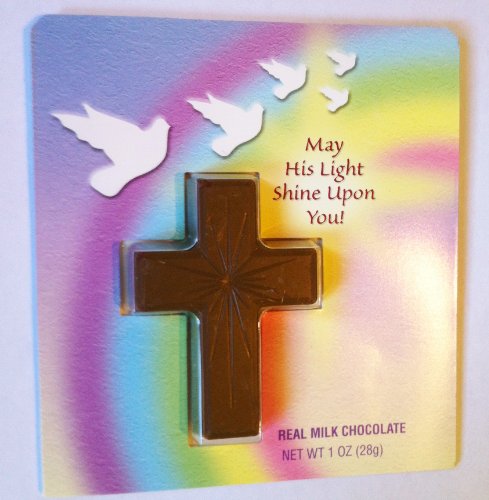
Yesterday while visiting a relative in the nursing home, I
came across a “fun and unique way of saying ‘Happy Easter’.” It came in the form of an Easter card with a 1
ounce real milk chocolate cross attached to the front of the card by a hard clear
plastic container. The card itself was
printed on heavy card stock paper. Five
white doves flew above the milk chocolate treat, and below this was the prayer –
“May His Light Shine Upon You!”
And
below that was an insignia proclaiming that the cross was indeed “Real Milk
Chocolate” with an actual net weight of 1 ounce along with a metric conversion
of 28 grams for those with faith in the metric system. Inside the card printed amongst rainbows, and
white silhouettes of doves and Easter lilies was the blessing “Happy Easter”
A check of amazon.com indicates that Beauty Place sells the
card for $10.95, which seems kind of pricey for 1 ounce of chocolate. Amazon also offered another version of the
card geared towards those who are more into rejoicing than bathing in the light,
and butterflies rather than doves, with a front greeting of “REJOICE IN THE
WONDER OF THE DAY”. If you’re compelled
to order the card, you best hurry as there was only one left in stock at the
time I checked.
I have spent my Easter
thinking about this card, wondering how that cross would taste. I thought that it was a good idea to make the
cross out of milk chocolate rather than a dark bitter chocolate; for I think
bitter chocolate might leave a bad taste in my mouth. I imagined that the creamy sweet milk
chocolate would be much easier to swallow.
And then I wondered if the Roman Emperor Constantine
struggled with these same types of issues in his dream where he was advised “to
mark the heavenly sign of God on the shields of his soldiers…by means of a
slanted letter X with the top of its head bent round, he marked Christ on their
shields” as told by Lactantius. Or if
Eusebius slogan was what he bought, “In Hoc Signo Vinces” which
translates to “with this sign, you will conquer”.
Whichever version it was, it was likely Constantine’s
infantry’s victory over Maxentius’ troops who were slaughtered and drowned in
the Tiber river that sold him that the emblem of an instrument of torture
was indeed worth reinvesting in as a way to keep the empire intact. He also got down in the river himself to be baptized and embrace the full power of the cross.
It seems that Constantine had forgotten about the meaning of
the original sign of the cross when he conscripted it for his purposes. Over three hundred years had passed since
legend has it his predecessors had used three life-sized wooden crosses to
torture and eventually kill a trinity of enemies of the Roman Empire. One of them namely Jesus, would go on to be
the role model of new Roman religion of Christianity.
Back in the day, they called the process crucifixion,
where the condemned person would either be tied or in the special occasions nailed
to the cross, and left to hang until they suffocated or bled to death. In some instances where the victims had a lot
of stamina or special connections in higher places, the Roman guards would stab
the victim with a spear in the side to speed things along. For the crowds seemed to lose interest in the spectacle
if it took too long – they had chores to do, kids to feed, and the guards had guard duty to
perform besides crucifixion duty.
Back then, the primary purpose of crucifixion was not so
much as an instrument of death, or a form of punishment, but a marketing
campaign designed to instill the fear of the empire in the people who would
gather to watch. And to make sure the
citizens got the message, the Roman’s would precede the event with public
trials and a parade where folks could chip in and help to torture the condemned
with shouts of ridicule, sprays of spittle, and if you were lucky enough, you
might even get to be called in to help the condemned to carry the cross.
Unlike the humane and secluded forms of capital
punishment practiced today – like lethal injection, the high tech electric
chair, or the less lethal technique of truth seeking water boarding – the goal then was barbaric, the more blood and guts the better, and
the more folks you could crowd into an event
the bigger the selling potential. Besides
inscription on his military shields, Constantine also came up with the great
idea of forging the symbol unto the coins of the empire.
After all of this, I came back to my sickeningly sweet
thoughts of yesterday’s milk chocolate cross.
And I wondered about how much else we had forgotten over the millenniums
that have passed since crucifixion was the sign of the times. And then I remembered what the prophet George
had to say on this in his own three part torturous sermon on the topic …
Warning! – do not read the following
blog if you are a man perched on top of a pyramid. It contains scenes showing how you might get
your bottom kicked out from underneath you along with suggestive lyrics.
Suggestion – if you have made it this far click on the link below
and listen to the song while you read the words below. Do not read the lyrics as they scroll across
the page – they will only distract you from what is being said. Also do not ask yourself “who is she, and
what does she want from me?” And if you don’t know what a bottom-leader is,
click here before going any further. And
enjoy any commercials that appear during the song.
Final Warning! – don’t buy anything,
it only feeds those perched on the top.
Egalitarianism: a belief in human equality, ...
For more on the topic click below to read Peter Gray’s Psychology
Today – Freedom to Learn Blog posted May 16, 2011 and titled: